
Table of Contents
Livestock are a valuable investment, but the Processing Room in Story of Seasons: A Wonderful Life (SoS AWL) is another equally important facility.
With this facility, you can turn cow’s and goat’s milk into various products, such as cheese and butter.
Although it is quite expensive, the money you spend to build this facility will quickly be recovered because cheese and butter have higher selling prices than milk.
In this guide, we will explain the Processing Room, from how to process milk into animal products to the selling prices of each product.
How to Get the Processing Room

You can build the Processing Room for 150,000 G through the Ledger. After ordering the building, Takakura will begin constructing it.
A few days later, Takakura will let you know that the Processing Room is ready to use.
Takakura will also take you on a tour to introduce you to the two machines inside.
The yellow, round-shaped machine is used to process milk into cheese, while the gray machine is used to process milk into butter.
How to Turn Milk into Cheese and Butter

To make butter or cheese in the Processing Room, simply take the milk out of your rucksack, approach the appropriate machine, and press the action button.
You will be asked how many products you want to make.
Although the game records each milk quality and type as a separate item, you can still make cheese and butter in large quantities based on the amount of milk available in your rucksack.
After finishing processing one type of milk, you can approach the machine again after selecting another type of milk in your inventory to make butter or cheese from that type of milk.
Marble Cow and Brown Cow
At twice the price of a Normal Cow, you can also purchase Marble Cows and Brown Cows through the Ledger.
Visually, these two cow breeds are very different, and each produces a unique type of milk: Marble Milk and Brown Milk.
The Ledger page contains information about the type of milk produced by each cow breed.
Marble Cows will produce Marble Milk, Brown Cows will produce Brown Milk, and Star Cows will produce Star Milk.
Marble Milk is better used to make cheese, while Brown Milk is better used to make butter.
Each type of cow’s milk can produce a higher-quality product.
For example, if you want to put Brown Milk (B) into the butter machine, you will get Butter (A) because Brown Milk is better suited for making butter.
However, if you put Brown Milk into the cheese machine, the resulting product will remain at quality B.
The same applies to Marble Milk, which is better suited for making Cheese.
- Brown Milk (B): Butter (A)
- Marble Milk (B): Cheese (A)
Therefore, use milk from the right type of cow to obtain higher-quality Cheese or Butter.
Don’t Use Star Milk!
Although turning milk into cheese or butter is one of the quickest ways to make money because processed products have higher selling prices, this does not apply to Star Milk.
Even at its lowest quality, Star Milk (B) still has a high selling price.
If you use Star Milk to make cheese or butter, this milk will not increase the quality or produce a special product. You will only get Butter (B) or Cheese (B).
For comparison:
- Cheese (B): 205 G
- Star Milk (B): 325 G
Considering that the selling price of the processed products is lower than the price of Star Milk itself, it is better to sell Star Milk directly and use other types of milk to make Butter or Cheese.
Goat Milk
If you buy a Goat during Spring when Van sells one at his shop, you can obtain Goat Milk as an additional product.
Although raw goat milk already has a fairly high selling price, you can also process it using the Processing Room.
Instead of producing regular cheese and butter, goat milk will produce Goat Cheese and Goat Butter.
Fortunately, goat milk is not like Star Milk. Goat milk is a special product, so processing it into Goat Cheese and Goat Butter is a great way to make more money.
Product List

Below is a complete list of the butter and cheese you can make using the machines in the Processing Room.
This table lists the product name, the ingredients used to make it, and the selling price for each product based on the four possible quality levels.
Cheese
| Image | Product | Need | Selling |
|---|---|---|---|
 | Cheese B | Normal Milk (B) Star Milk (B) Brown Milk (B) | 205 G |
 | Cheese A | Normal Milk (A) Star Milk (A) Brown Milk (A) Marble Milk (B) | 230 G |
 | Cheese S | Normal Milk (S) Star Milk (S) Brown Milk (S) Marble Milk (A) | 285 G |
 | Cheese S☆ | Normal Milk (S☆) Star Milk (S☆) Brown Milk (S☆) Marble Milk (S) | 425 G |
 | Goat Cheese B | Goat milk B | 650 G |
 | Goat Cheese A | Goat milk A | 730 G |
 | Goat Cheese S | Goat milk S | 920 G |
 | Goat Cheese S☆ | Goat milk S☆ | 1.350 G |
Butter
| Image | Product | Need | Selling |
|---|---|---|---|
 | Butter B | Normal Milk (B) Star Milk (B) Marble Milk (B) | 205 G |
 | Butter A | Normal Milk (A) Star Milk (A) Marble Milk (A) Brown Milk (B) | 230 G |
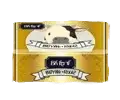 | Butter S | Normal Milk (S) Star Milk (S) Marble Milk (S) Brown Milk (A) | 285 G |
 | Butter S☆ | Normal Milk (S☆) Star Milk (S☆) Marble Milk (S☆) Brown Milk (S) | 425 G |
 | Goat Butter B | Goat milk B | 650 G |
 | Goat Butter A | Goat milk A | 730 G |
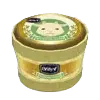 | Goat Butter S | Goat milk S | 920 G |
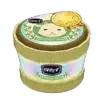 | Goat Butter S☆ | Goat milk S☆ | 1.350 G |